Bones, Growth and Puberty Problems Parents Worry About the Most
The short answer: bones are the part of DMD care most often left until something goes wrong — and a fracture is one of the most dangerous turning points in the whole course of the disease.…
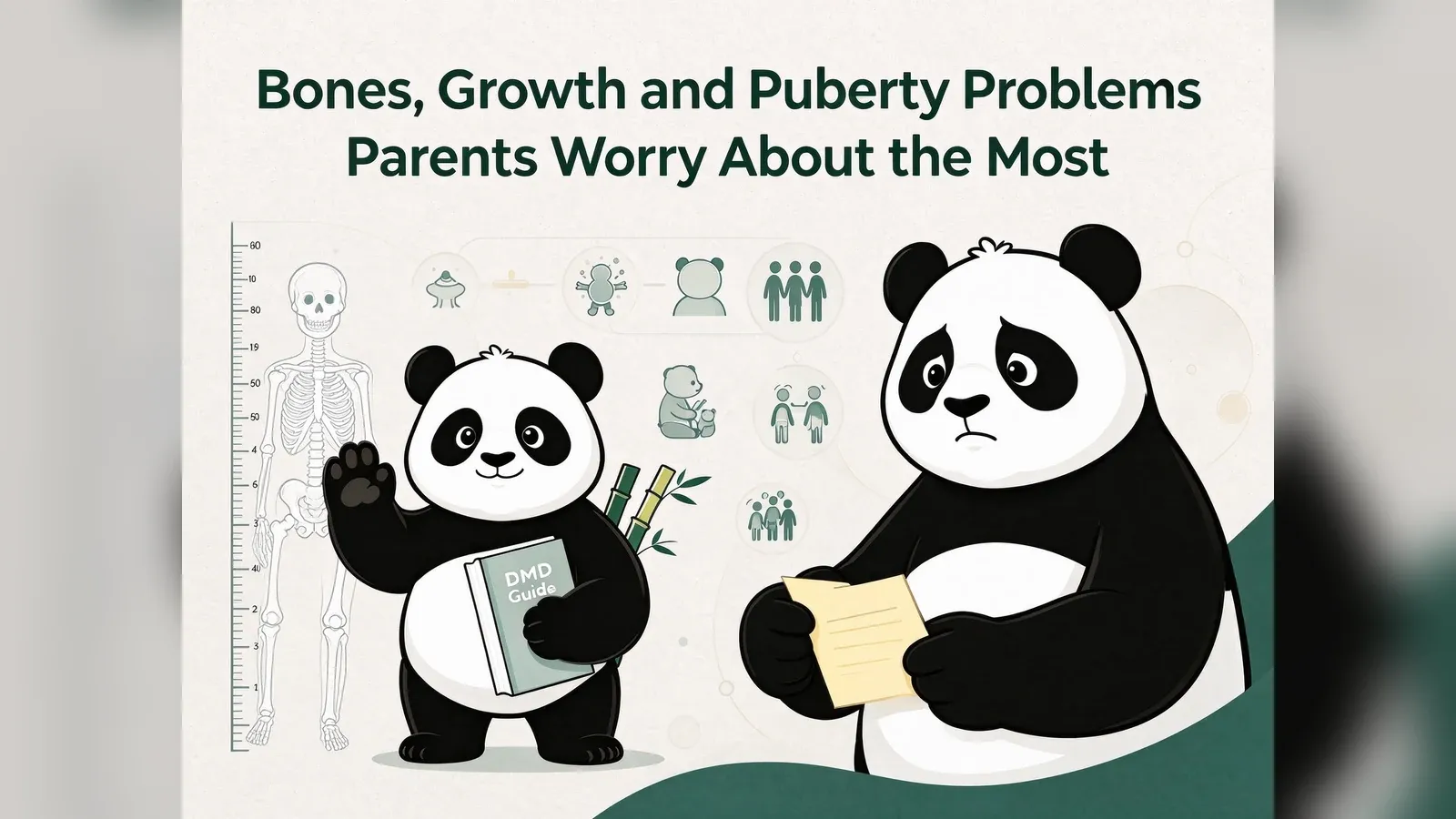
What parents ask most “He's a whole head shorter than his classmates. Is that the steroids? Should he have growth hormone?” “How often should bone density be checked? He says his back hurts but he hasn't fallen — can you fracture without a fall?” “What are bisphosphonates? Are they safe?” “He's 13 or 14 and there's still no sign of puberty. Is that normal? Should he have testosterone?”
The short answer: bones are the part of DMD care most often left until something goes wrong — and a fracture is one of the most dangerous turning points in the whole course of the disease. A vertebral fracture, or a fracture of a long bone, can mean months in bed. For a boy who is only just managing to walk, months in bed can mean he never stands again. Long-term steroids, less activity, delayed puberty and too little calcium: put those four together and osteoporosis is almost inevitable. That is why the guidelines call for monitoring before it hurts, not scans after it does.
The standard checks (UK NorthStar standards, revised 2023)
Every boy with DMD should have lateral spine imaging plus a DXA bone-density scan every year. Note this: a vertebral fracture can happen with no injury, and even with no obvious pain. Take back pain seriously, and use regular imaging — it is the only way to catch a silent vertebral compression.
Everyone should take vitamin D, with a blood 25-hydroxyvitamin D target of at least 50 nmol/L. Adjust the dose from blood results, not by guesswork.
As soon as there is a vertebral fracture (including a mild one with no symptoms) or a low-trauma long-bone fracture, refer to endocrinology or orthopaedics and discuss bisphosphonates. These are currently the main drugs used for DMD osteoporosis. Whether to use them, and for how long, is a specialist decision.
Scoliosis (curvature of the spine) should be screened regularly by the neuromuscular team. It is not just about posture. When severe, it squeezes the heart and lungs, and links directly to the heart and lung monitoring in Article 5.
Height and puberty: do not only stare at “short”
Steroids are one of the main reasons for poor growth, but the three drugs differ (see Article 3: deflazacort suppresses growth more, vamorolone relatively less). There is no single answer on growth hormone that fits every child. Endocrinology has to judge it from bone age and the whole picture. Do not find your own supply and inject it.
Delayed puberty is overlooked even more often. NorthStar advises starting to talk with the child at age 10–11 about the fact that puberty may be late, assessing formally from age 12, and referring boys with no signs of puberty to discuss testosterone. Testosterone is not just about “starting development.” It matters for bone strength, muscle and mood. Awareness among parents in China is low, and some refuse it instinctively, thinking of it as forcing maturity. Hear the endocrinologist out on the pros and cons first, then decide. One gap to be honest about: there is currently no clinical data on how vamorolone affects puberty. That question has no answer yet.
In China | Abroad
How well bone-density monitoring, spine screening and bisphosphonate use are standardised varies a lot between hospitals. Parents need to be the pushy ones: at review, ask directly, “What is his bone follow-up plan, and has this year's bone density been done?” Pin it into every review list. | The UK NorthStar network has written bone and endocrine monitoring into one shared standard — annual imaging and bone density, a vitamin D target, and set ages for puberty assessment — so teams simply follow it. Vamorolone's long-term data hint at an advantage on fractures and height (vertebral fractures 8.1% versus 41.9% for deflazacort; height advantage 12.17 cm), but the source is a company press release, so weigh the evidence accordingly (see Article 3).
Sources for this article
UK NorthStar, Standards of Care for DMD — Bone and Endocrine, revised 2023: https://img1.wsimg.com/blobby/go/c41fb68b-e89f-48ad-ac1b-afa320649a21/downloads/DMD%20Care%20UK_Bone%20and%20endocrine%20standards%20of%20ca.pdf?ver=1744277938844
Duchenne UK (bone density, vitamin D, testosterone and bisphosphonates): https://www.duchenneuk.org/understanding-duchenne/treatments
Santhera press release (vamorolone long-term bone and height data) — company release, not peer-reviewed: https://www.santhera.com/assets/files/press-releases/260309-Santhera-Guardian-data-at-MDA-Final_English.pdf